
Electric Bi-Folding Gates
Supplied & Installed Across the UK
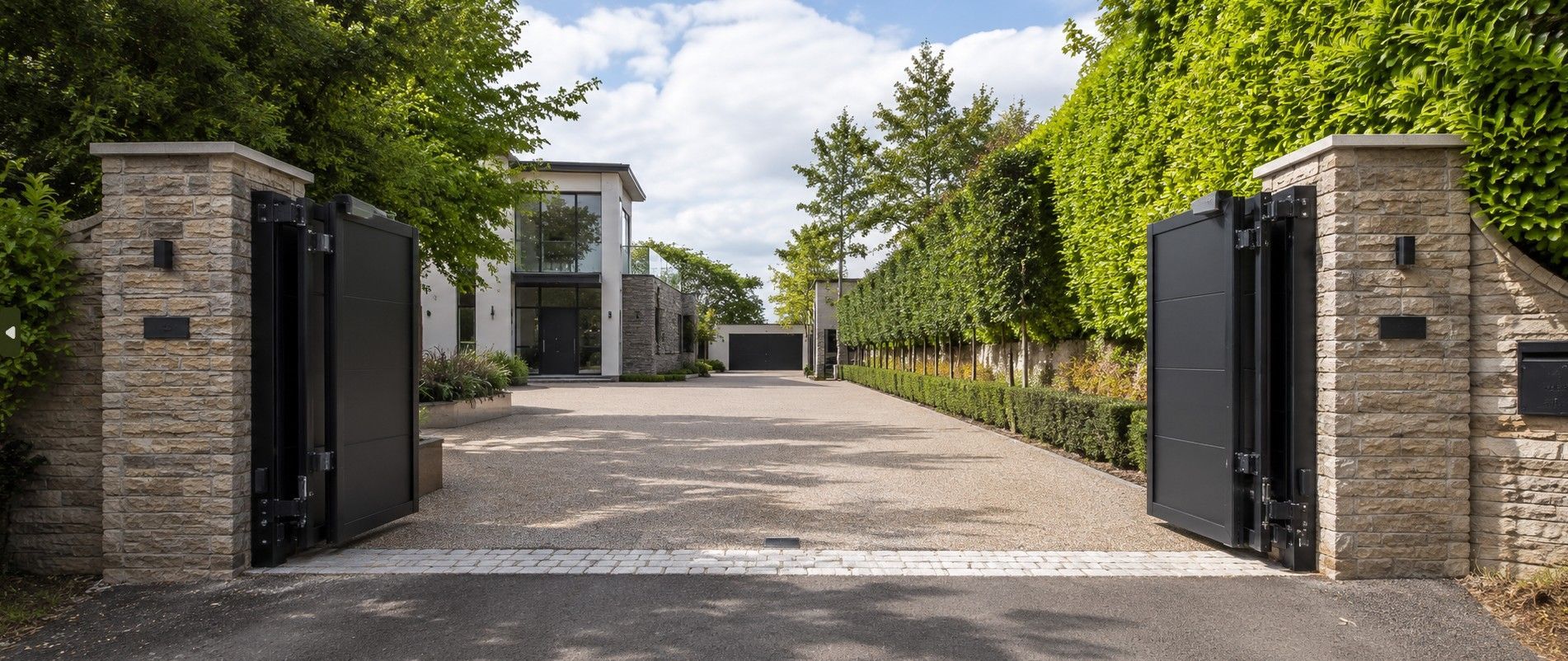
Bi-folding gates fold back compactly against the pillars when open — taking up far less side clearance than a sliding gate and opening significantly faster than a swing gate. The ideal solution for wider entrances where space on either side is limited.
What are electric bi-folding gates?
A bi-folding gate has two panels per side connected by a central hinge. When the gate opens, the panels fold in on themselves — the outer panel folds against the inner panel and the whole assembly tucks compactly against the pillar. A 3m gate leaf folds into roughly 1.5m of clearance rather than needing 3m of side run like a sliding gate.
This makes bi-folding gates well suited to wider entrances, high-traffic properties and any site where full sliding gate clearance is unavailable but swing clearance is also restricted.
Bi-folding gates also open faster than swing gates — typically in under 10 seconds — making them the preferred choice for commercial entrances, busy driveways and any location where speed of access matters.
⚡ELECTRIC BIFOLD GATES
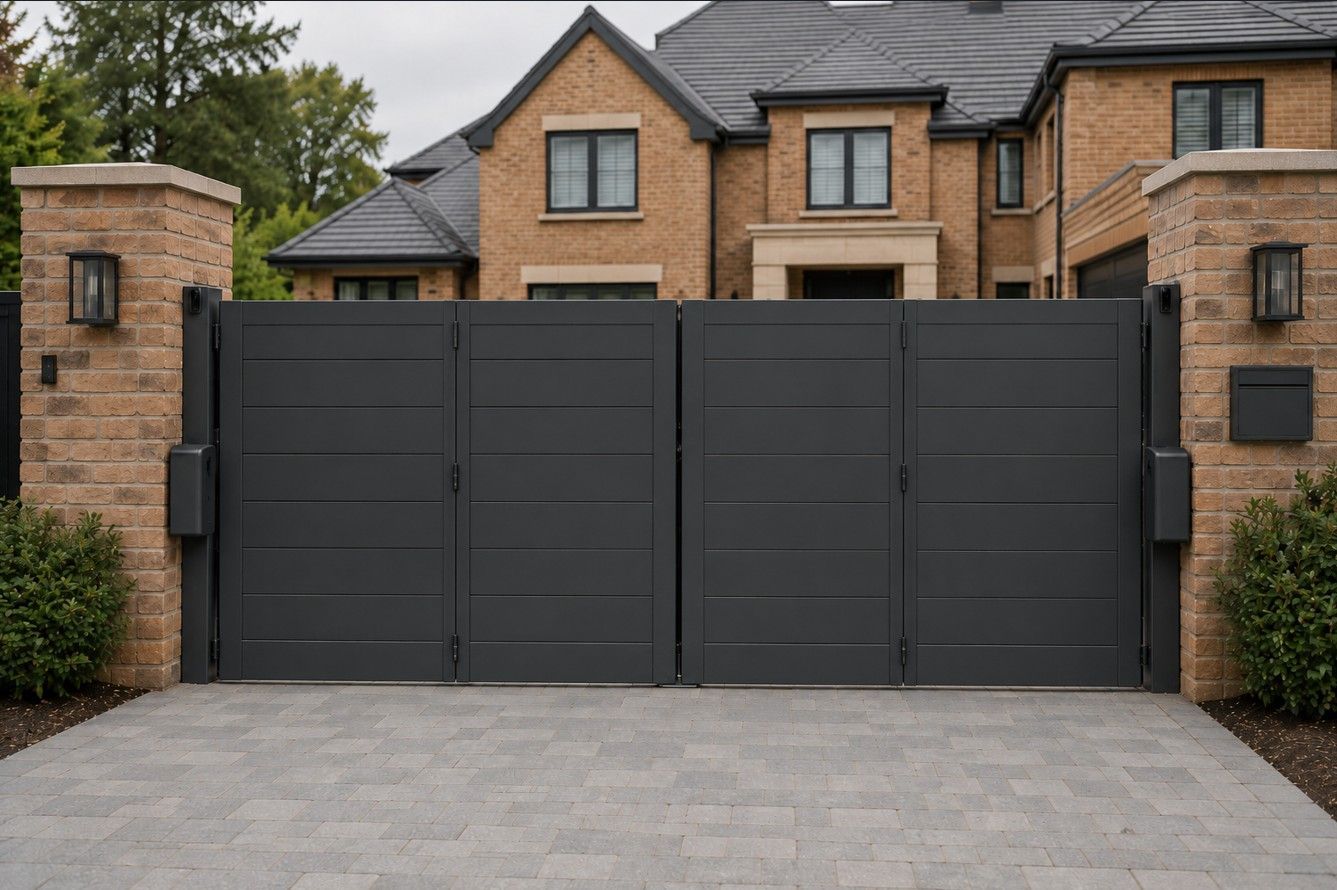
Bi-folding gates closed
electric bi-folding gates in the fully closed position at a wide residential entrance.
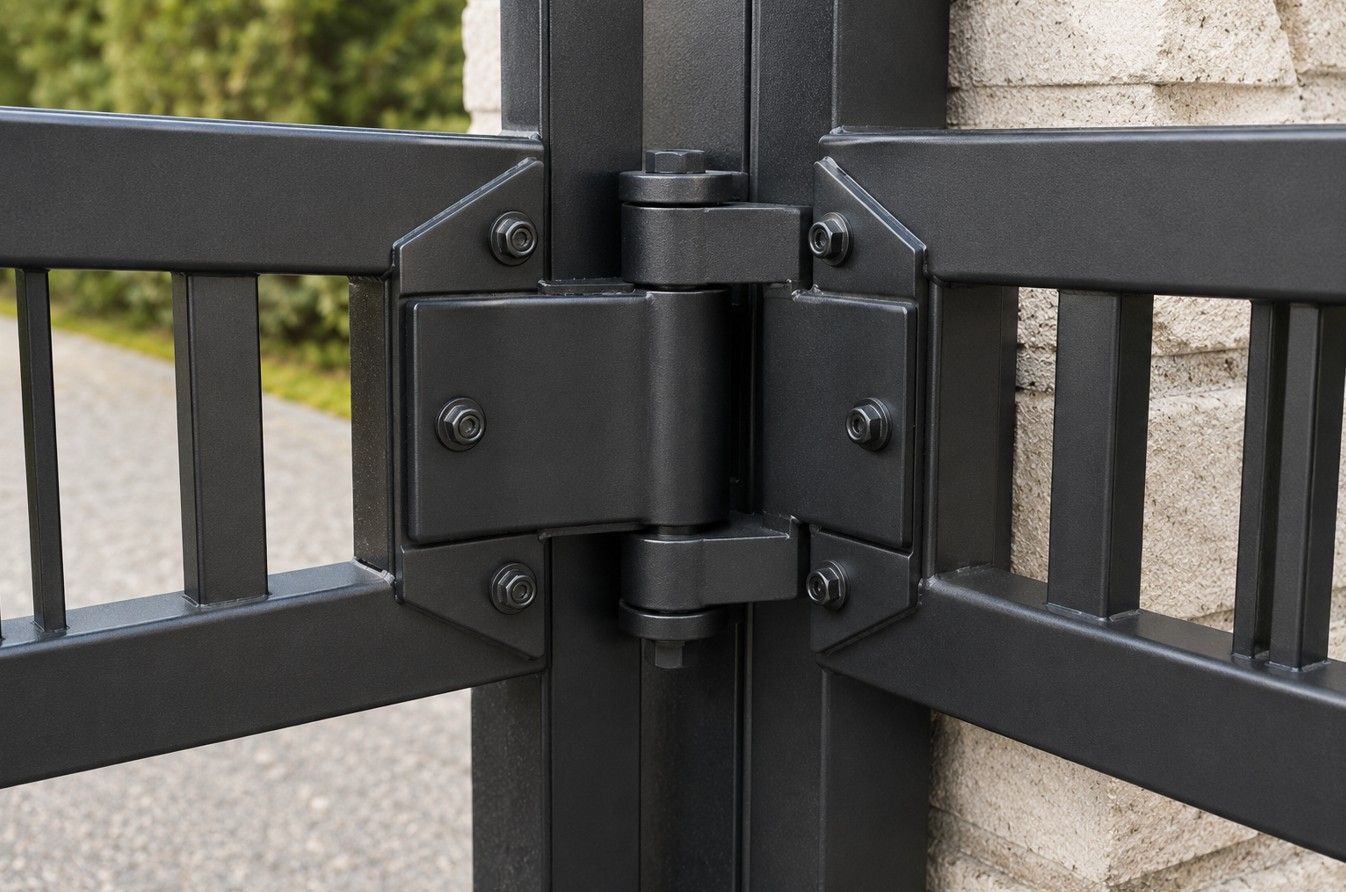
Fold mechanism close-up
central hinge and fold mechanism of an electric bi-folding gate
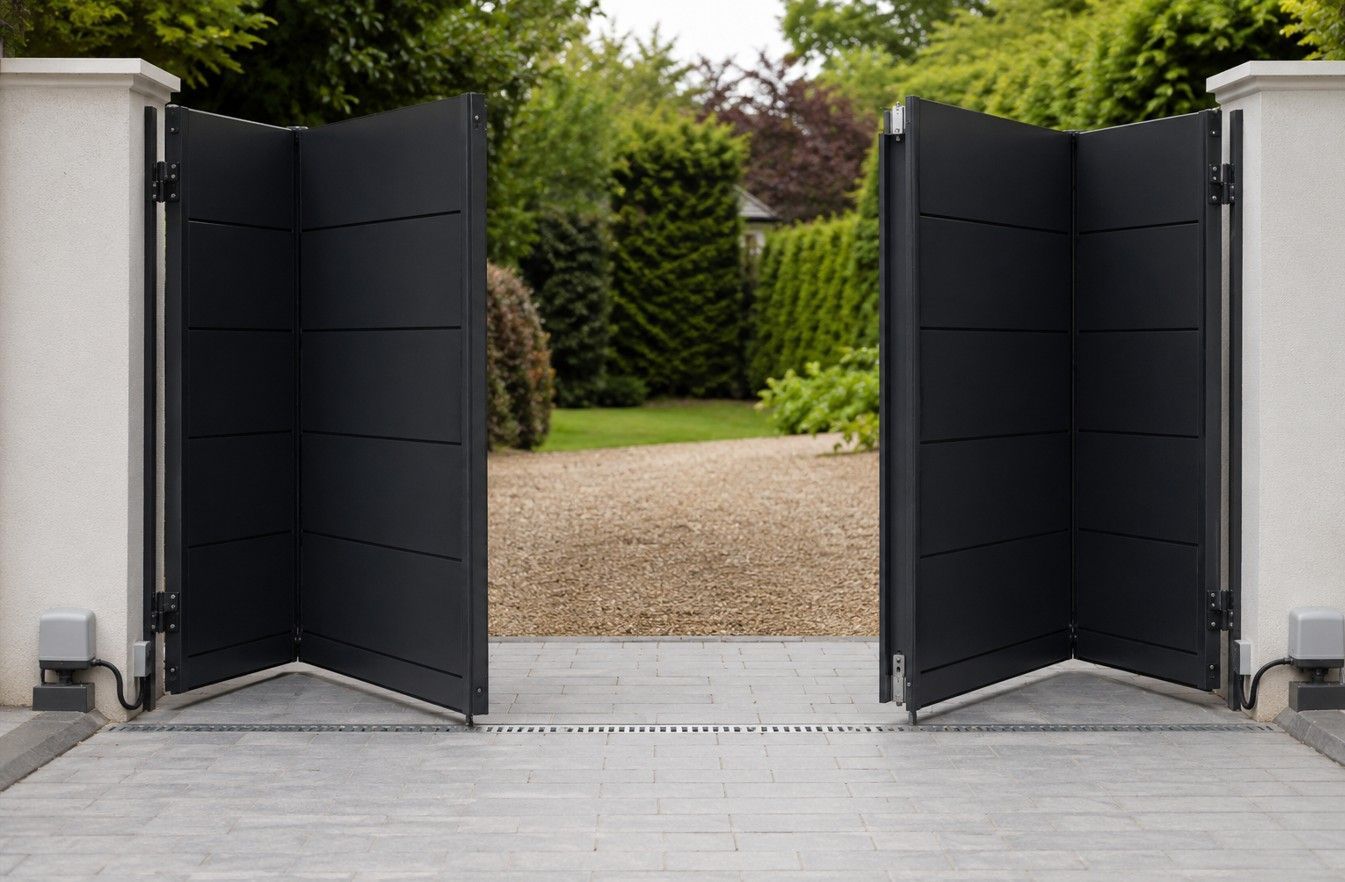
Bifold gates partially open
Electric bi-folding gates caught mid-opening — panels partially folded
How bi-folding gates compare to swing and sliding
Each gate type suits different site conditions. Bi-folding gates occupy the middle ground — faster than swing, needing less side clearance than sliding. Here's a quick guide.
Not sure which gate type is right for your entrance? Send us photos and measurements and our local installer will advise. Get expert advice →
Automation options for bi-folding gates
Bi-folding gates use dedicated bi-fold actuator motors — one per leaf. Three levels of automation are available. Because bi-folding gate systems vary significantly in size and specification, pricing is provided at survey stage rather than as a fixed rate.
Basic
- · Photocell safety beams
- · 2x wireless remote fobs
- · Basic control board
Intermediate
- · 2–4x photocell beams
- · 4–6x safety edges (all crush points)
- · 4+ wireless remote fobs
- · GSM phone control with SIM
- · 24v digital MAG lock
Advanced
- · Wireless photocell beams
- · In-ground vehicle detection loop
- · Double 24v MAG locks
- · Mobile app — multiple users
- · Bluetooth & WiFi connectivity
Bi-folding gate automation pricing is provided at survey stage due to the variation in gate size, panel weight and site conditions. See our general pricing guide for context, or submit an enquiry for a quote specific to your project.
⚡ FREQUENTLY ASKED QUESTIONS ABOUT ELECTRIC BI-FOLD GATES
How much clearance do bi-folding gates need?
A bi-folding gate needs approximately half its total width as side clearance — so a pair of gates spanning a 6m entrance (3m per side) needs roughly 1.5–1.8m of clearance alongside each pillar. This is significantly less than a sliding gate, which would need the full 3m run. Your installer will measure this precisely at survey stage.
How fast do electric bi-folding gates open?
Most bi-folding gates open in under 10 seconds — faster than a comparable swing gate. This makes them particularly well suited to commercial entrances and properties with frequent vehicle movements.
Are bi-folding gates more expensive than swing or sliding gates?
Generally yes — bi-folding gates have more components (four panels, four motors, a more complex hinge and guide system) which increases both the manufacturing and installation cost compared to an equivalent swing or sliding gate. They represent a premium solution suited to situations where their specific advantages — speed, compact folding and wide opening — are needed.
Can bi-folding gates be fitted to existing pillars?
Possibly — it depends on the pillar condition, spacing and construction. Bi-folding gates exert different forces on the pillar than swing gates. Your installer will assess the suitability of existing pillars at survey stage and advise whether they can be used or whether new ones are needed.s.
Are bi-folding gates suitable for residential properties?
Yes, though they are more commonly specified for commercial properties, wider residential driveways and prestige homes. For a standard residential driveway of 3–4m, a swing gate is usually more cost-effective. Where the entrance is wider, the access frequency is high or swing clearance is restricted, bi-folding becomes the right choice.
Do bi-folding gates work in a power cut?
Yes — all systems include a battery backup for short power outages and a manual release so the gates can be opened by hand if needed. Your installer will demonstrate the manual release procedure at handover.
Find your local fabricator
Choose your region to see every town we cover, or go straight to one of our busier locations below.
By region
Popular locations
Don’t see your town? Every location we cover is listed on our areas we cover page, or send us your postcode and we will confirm.