
Electric Gate Safety
What Every Owner Needs to Know
Electric gates are powerful mechanical devices. Every installation in the UK must meet BS EN 12453 — the standard for powered pedestrian and vehicle doors and gates. This guide explains what that means, which safety devices are required and what gate owners are responsible for.
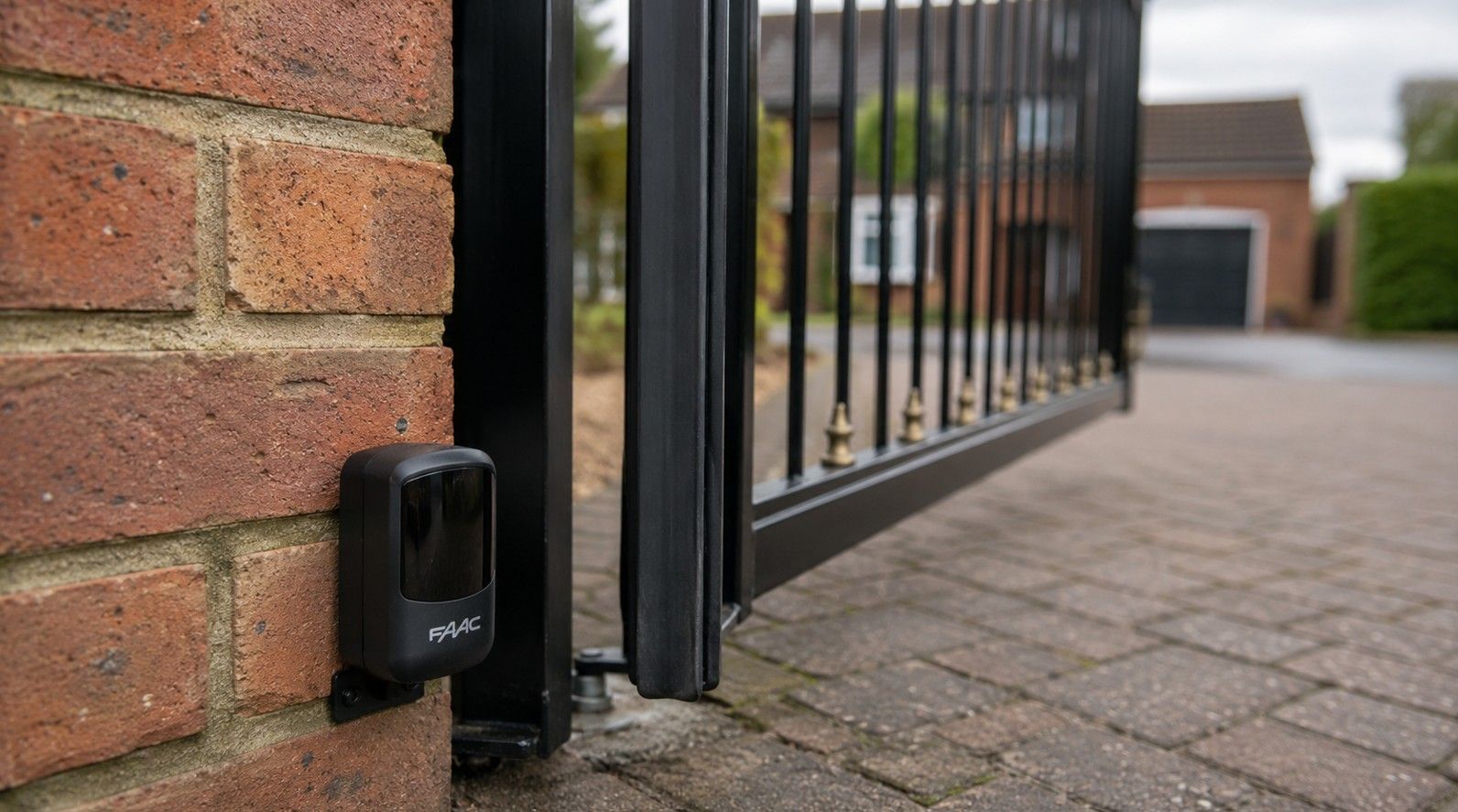
What is BS EN 12453?
BS EN 12453 is the UK and European standard that sets out the safety requirements for power-operated doors and gates. It covers residential and commercial gates of all types — swing, sliding, bi-folding and rising.
The standard requires that motorised gates have safety devices capable of detecting and responding to an obstruction, that motor closing force is limited to safe levels, and that all of this is documented and provided to the gate owner at installation.
Compliance is not a one-time event — safety devices degrade over time and must be regularly tested to confirm the installation remains within safe limits.
- ✓ Safety devices to detect and respond to obstruction
- ✓ Motor closing force limited to safe levels
- ✓ Risk assessment carried out at installation
- ✓ Declaration of conformity provided to gate owner
- ✓ User instructions and manual release information provided
Installer: Ensures the installation meets the standard and provides the declaration of conformity at handover.
Gate owner: Ensures the system remains compliant through ongoing maintenance. If a gate causes injury and is found non-compliant, liability rests with the owner.
⚡ELECTRIC GATE SAFETY
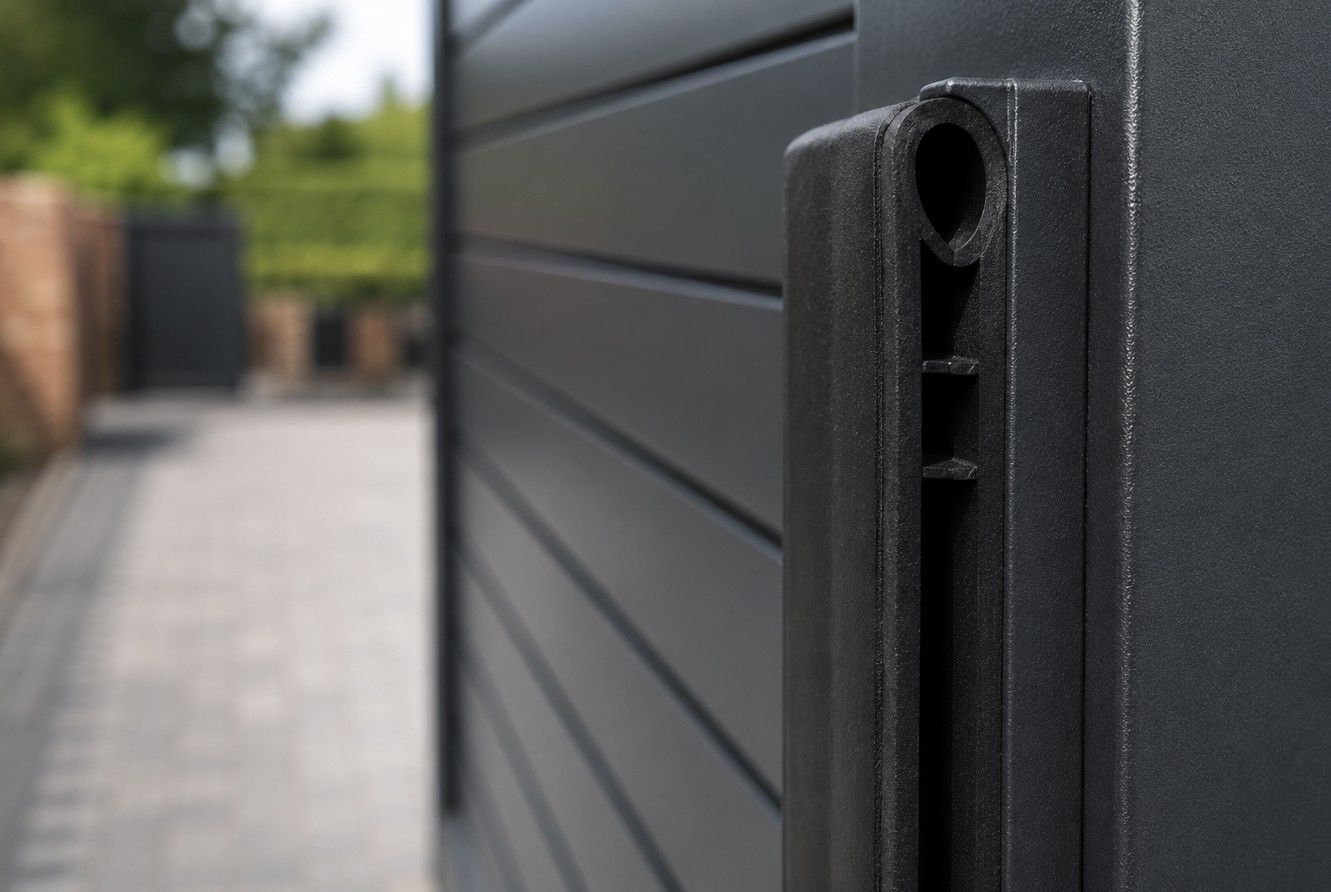
Safety edge close-up
Black rubber safety edge strip fitted to the leading edge of a metal gate
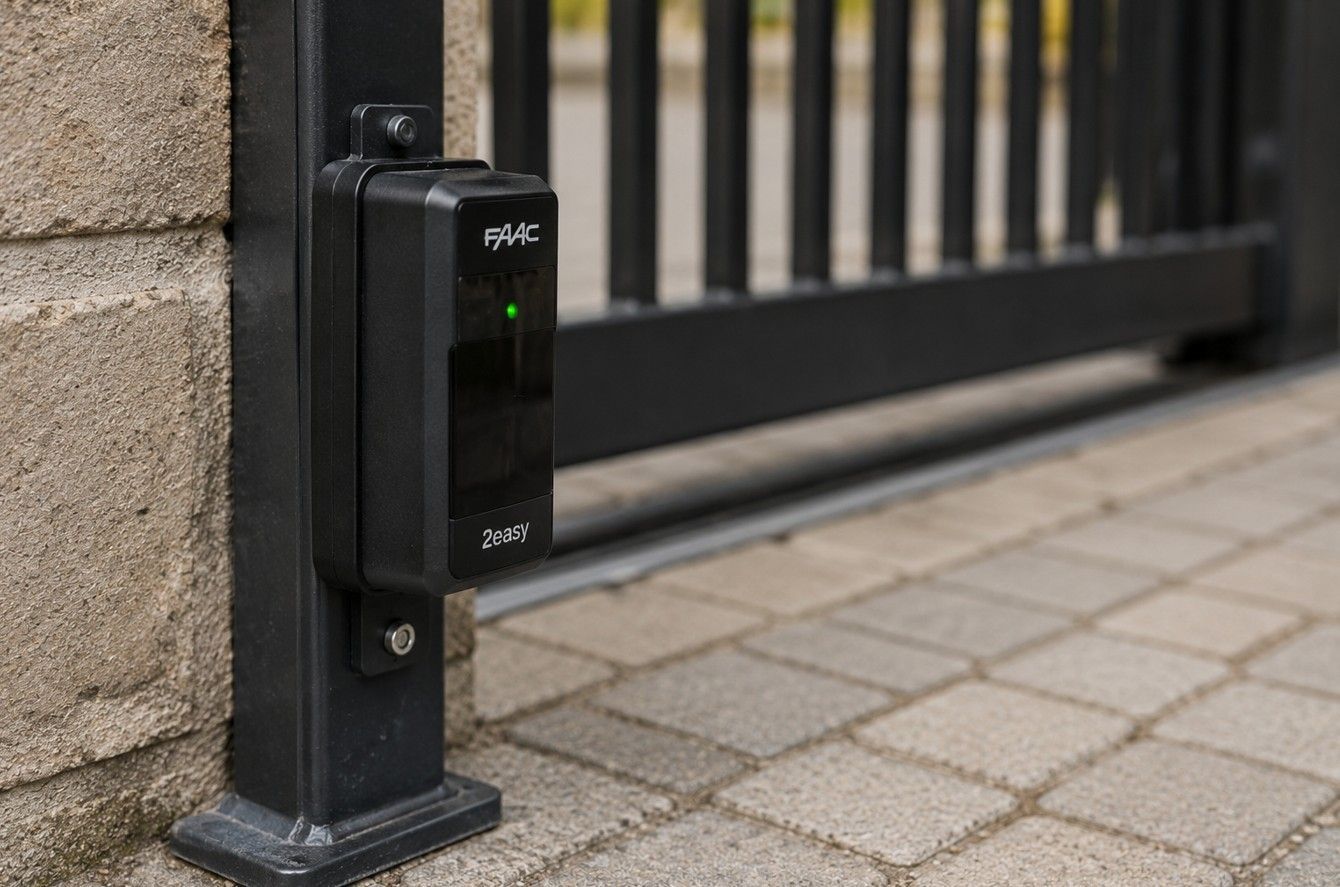
Photocell beam sensor
photocell beam sensor unit mounted at the base of a gate pillar
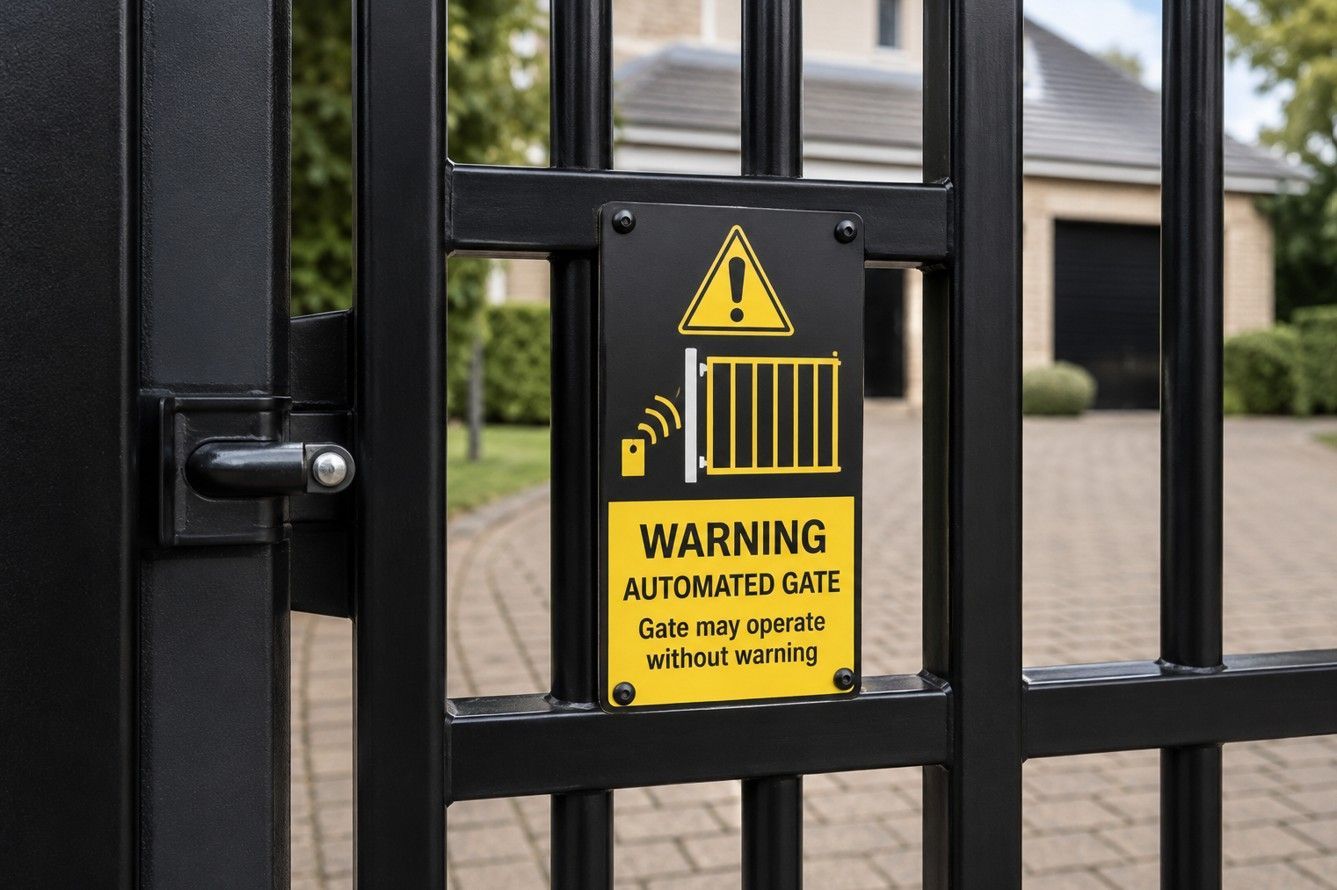
Warning sign on gate
Automated gate warning sign affixed to a black metal gate
Required safety devices — what each one does
BS EN 12453 specifies a combination of safety devices that work together to protect people from the hazards created by a moving powered gate. All ElectriGate installations include the required devices as standard.
Rubber or pneumatic strips fitted to the leading and trailing edges of the gate. When compressed by an obstruction they signal the gate to stop and reverse immediately. Required at all crush points — leading edge, trailing edge and any intermediate point where a person could become trapped.
Infrared beam sensors positioned across the gate opening. If the beam is broken by a person or vehicle while the gate is moving, the gate stops and reverses. Minimum one pair per gate — wider entrances may require additional pairs for full coverage.
The motor's closing force is calibrated so that even if a safety edge fails to detect an obstruction, the gate cannot exert more force than the limits specified in BS EN 12453. This is measured with a calibrated force gauge at installation and must be re-checked at every annual service — motor force can drift over time.
Automated gate warning signs must be displayed on or near the gate to alert pedestrians and visitors that the gate may move without warning. These are required under the standard and are fitted as standard on all ElectriGate installations.
Every powered gate must have a manual release mechanism that allows the gate to be opened by hand in the event of power failure or system fault. Your installer will demonstrate this at handover. Keep the release key accessible and ensure all regular users of the gate know where it is.
Your responsibilities as a gate owner
Compliance doesn't end at installation. As a gate owner you have ongoing duties to ensure the system remains safe for everyone who uses or passes near it.
Annual maintenance
Have the system professionally serviced at least once a year. Safety devices must be tested and motor force re-measured. Maintain a written service record.
Book a maintenance visit →Do not modify the system
Do not adjust motor force settings, disable safety devices or make electrical modifications. Any changes must be carried out by a competent person and re-tested to BS EN 12453.
Report faults promptly
If a safety device is known to be faulty, do not continue using the system. Book a repair immediately — a non-compliant gate in use represents a real hazard.
Book a repair →Keep documentation
Keep your declaration of conformity, installation manual and service records safely. These are your evidence of compliance and due diligence if ever required.
⚡ FREQUENTLY ASKED QUESTIONS ABOUT ELECTRIC GATE SAFETY
What is BS EN 12453 and does it apply to my residential gate?
BS EN 12453 is the UK and European safety standard for power-operated pedestrian and vehicle doors and gates. It applies to all powered gate installations — residential and commercial. There is no exemption for domestic gates. All ElectriGate installations are carried out to this standard.
Is my existing gate safe if it was installed before BS EN 12453 was introduced?
Older installations may not have the safety devices now required by the standard. If you are unsure whether your gate is compliant, book a safety assessment — your installer will test the safety devices and motor force and advise on any remedial work needed.
Can my gate still injure someone even with safety devices fitted?
Safety devices significantly reduce the risk but do not eliminate it entirely. This is why the standard requires multiple layers of protection — safety edges, photocells and force limitation working together. Regular testing ensures all three layers remain functional. A gate with a failed safety edge and no other protection in place is a serious hazard.
Do I need to display a warning sign on my gate?
Yes — automated gate warning signs are required under BS EN 12453 and must be displayed on or near the gate. Your installer will fit these at installation. If your signs are damaged or missing, replace them promptly.
What happens if my gate injures someone?
If the gate is found to be non-compliant with BS EN 12453 at the time of the incident, liability rests with the gate owner. This can have serious legal and insurance implications. Maintaining annual maintenance records is your evidence that you have fulfilled your duty of care.
How do I know if my safety devices are working correctly?
You can do a basic check by placing a solid object in the gate's path and confirming it reverses. However, formal safety edge resistance testing and motor force measurement require calibrated equipment and must be carried out by a competent installer. This is done as part of every annual maintenance visit.
Find your local fabricator
Choose your region to see every town we cover, or go straight to one of our busier locations below.
By region
Popular locations
Don’t see your town? Every location we cover is listed on our areas we cover page, or send us your postcode and we will confirm.