
Electric Gate Installation
What Happens, Step by Step
From first survey to handover, knowing how an electric gate installation actually runs makes the whole process easier to plan around. Here is what your installer does, how long each stage takes, and what needs to be ready before anyone arrives on site.
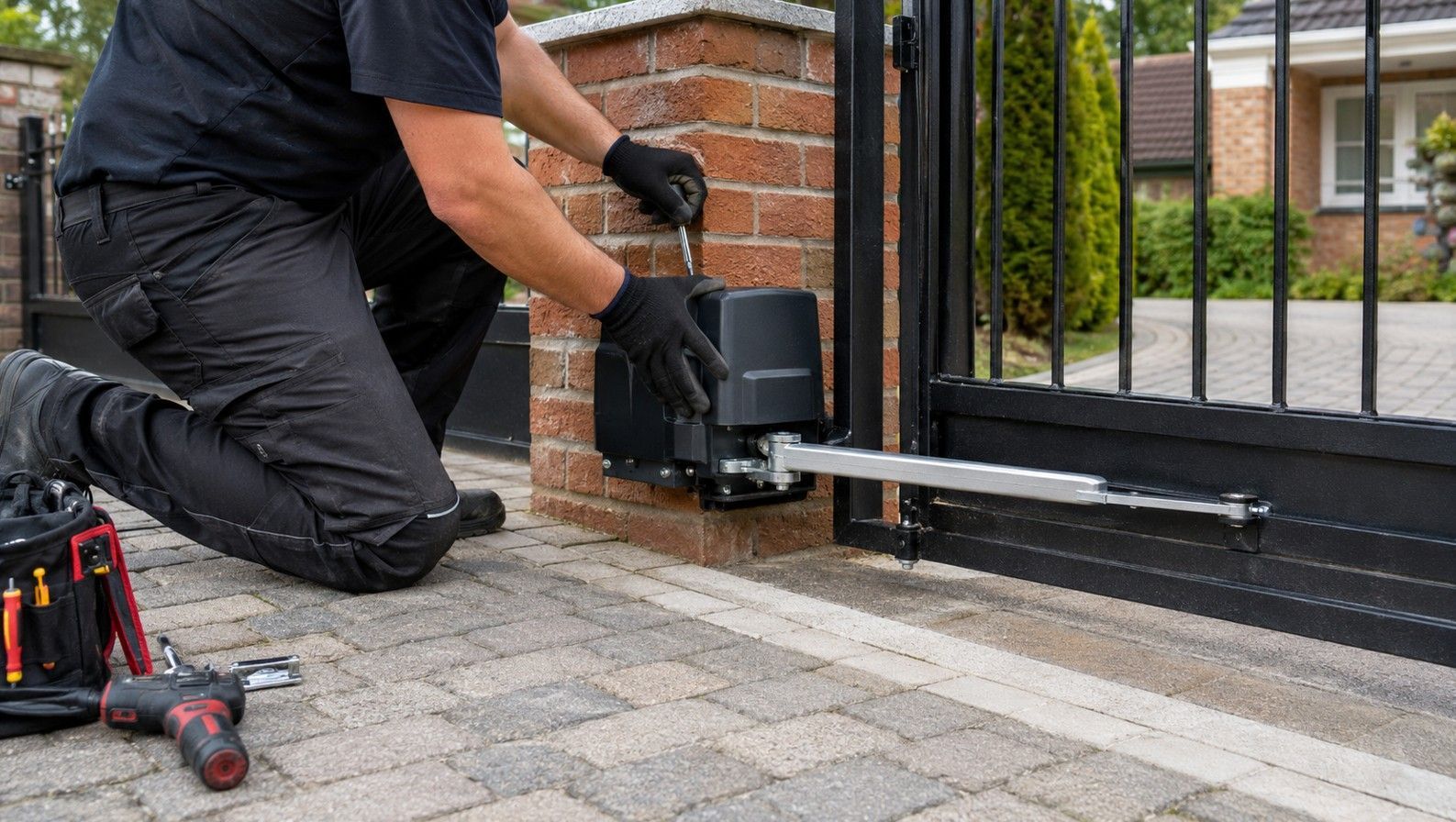
What happens before the work starts
Site survey
Your installer will visit to assess the entrance, measure the opening, check pillar condition, identify cable routes and confirm the full specification. For most residential projects this takes around an hour and is free of charge.
Provisional quote from photos
In many cases your installer can provide a realistic cost indication from good photos and measurements before visiting. When submitting your enquiry through ElectriGate, include clear photos of your entrance from both sides, your approximate gate width and details of any existing pillars.
Planning permission
Most residential electric gate installations fall under permitted development rights and do not require planning permission. Exceptions apply to listed buildings, conservation areas and gates over 1m adjacent to a highway.
Full planning guide →Preparing your property
Keep the entrance area clear on installation day and ensure there is vehicle access to the site. If new posts are being concreted in, they will need 24–48 hours to cure before the gates and motors are fitted — your installer may split the work across two days.
⚡ELECTRIC GATE INSTALLATION
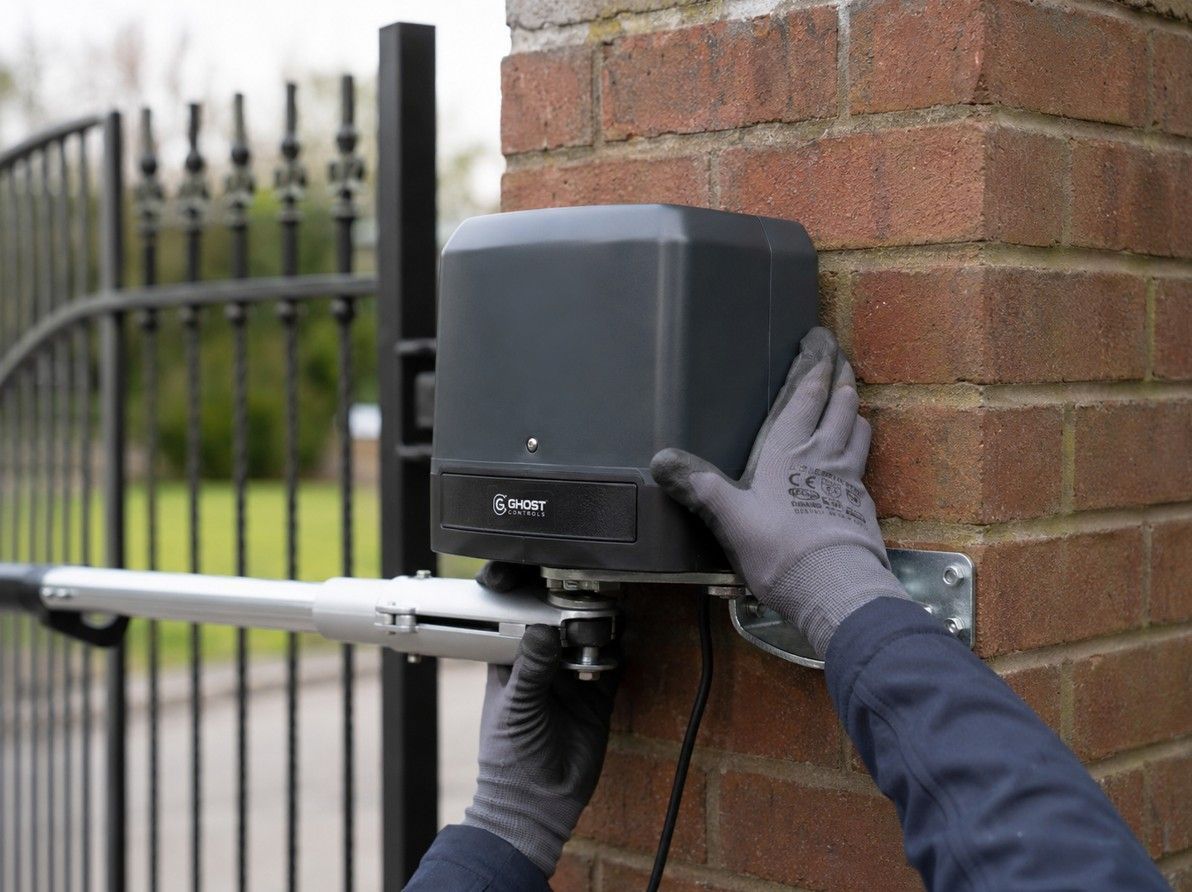
Motor installation
Installer fitting a surface-mounted ram motor unit to a brick gate pillar.
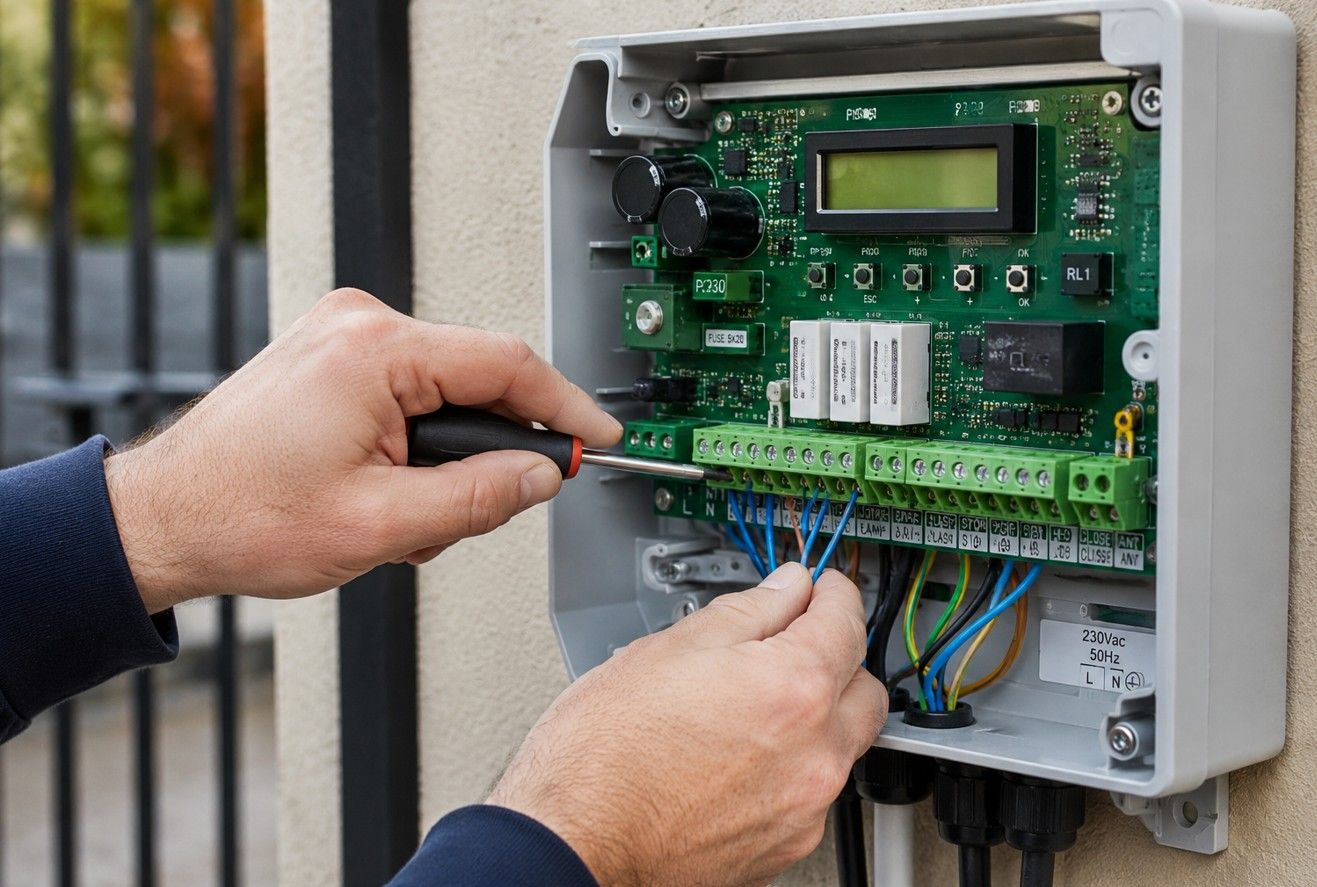
Control panel wiring
An electric gate control panel mounted on a wall with wiring connections being made
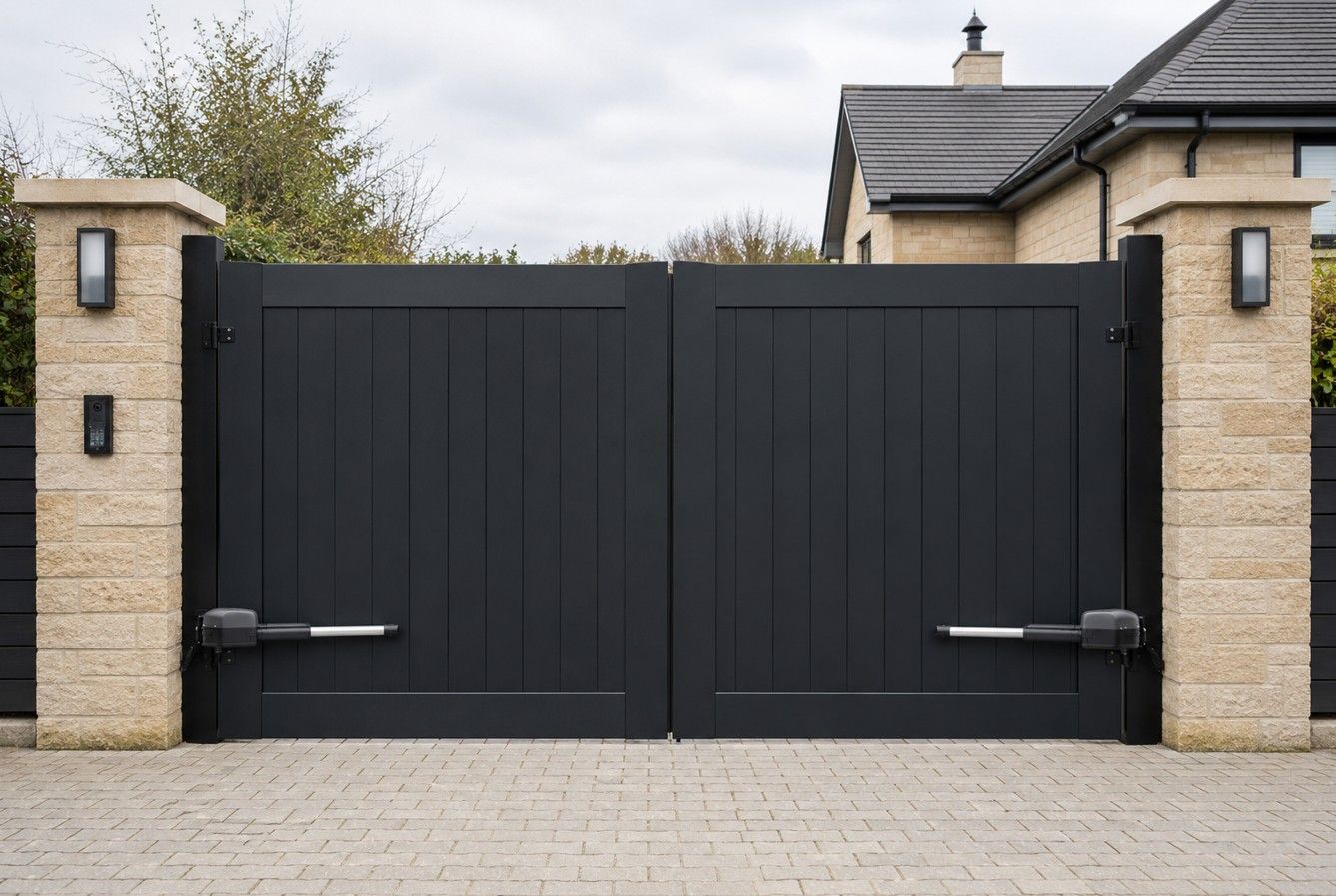
Completed installation
Pair of newly installed black composite electric swing gates in the closed position
What happens on installation day
Most residential installations are completed in one to two days. Here's a typical sequence of work so you know what to expect.
Posts and groundworks
If new pillars or posts are required these are installed and set in concrete. Cable trenching for in-ground loops or long cable runs to the house is also done at this stage. New posts typically need 24–48 hours to cure.
Gate hanging
The gate leaves are hung on the pillars and checked for alignment, level and swing clearance before any motors are fitted. Getting this stage right is critical to smooth, long-term operation.
Motor fitting
Motors are fitted to each gate leaf — either surface-mounted ram units at the hinge point or concealed in-ground motors beneath the pillar base. The motor type will have been agreed at survey stage.
Electrical connection
The control panel is wired and powered. Cable runs from the house or power source to the control panel are completed and concealed where possible.
Safety devices
Photocell beams, safety edges and any additional safety devices are fitted and tested to BS EN 12453 standard — the UK safety standard for power-operated pedestrian and vehicle doors and gates.
Access control
Intercom, keypad, remote fobs, GSM module or smartphone app connected and programmed to your requirements. Additional users can be added at this stage.
Testing and handover
Full system test across all functions. Your installer demonstrates operation, shows you the manual release procedure in case of power failure, and hands over all documentation including compliance certificates and warranty information.
Typical installation timelines
Standard installation
Existing pillars in good condition, surface-mounted motors and a straightforward cable run. Gate, motors, safety devices and access control all fitted and commissioned in a single visit.
New posts required
New posts concreted on day one. Return visit on day two or three to hang the gates and fit the motors once the concrete has fully cured. Most common project type.
Complex installation
In-ground motors, significant groundworks, long cable trenches or smart home integration. Your installer will advise the likely programme at survey stage.
Looking after your electric gates
Annual servicing
Electric gates should be serviced once a year — lubrication, safety edge testing, motor force calibration, photocell alignment and general checks to keep the system running safely and reliably.
Maintenance guide →Safety compliance
All installations must comply with BS EN 12453. Your installer will provide a declaration of conformity at handover confirming the installation meets the standard. Keep this document safely.
Safety guide →Warranties
Warranty terms are agreed directly with your installer and typically cover the gate structure, motor units and control equipment separately. Confirm all warranty terms at handover and keep documentation in a safe place.
Manual release
All systems have a manual release for use during power cuts. Your installer will demonstrate this at handover. Keep the release key in an accessible location and make sure all regular users of the gate know where it is.
⚡ FREQUENTLY ASKED QUESTIONS ABOUT ELECTRIC GATE INSTALLATION
Do I need an electrician for electric gate installation?
The motor and control panel wiring is typically carried out by your gate installer, who will be experienced in low-voltage electrical work. The mains power connection from your consumer unit to the gate supply point should be carried out by a qualified electrician if not already in place. Your installer will advise on this at survey stage.
Can electric gates be installed on a sloped driveway?
Yes, but it depends on the slope direction and severity. Slopes running across the gate line (side to side) have little impact. Slopes running toward the gate (front to back) can affect swing gate operation — a sliding gate is often more suitable in this case. Your installer will assess this at survey stage.
Will installation damage my driveway?
Post installation requires excavation for the concrete footings. Good installers minimise disruption and reinstate surfaces neatly. If cable trenching is required, blocks or slabs are lifted and relaid. Discuss surface reinstatement with your installer when agreeing the scope of work.
Can I have electric gates installed in winter?
Yes — installations proceed year-round. Very cold weather can affect concrete curing time for new posts, which may extend the overall programme slightly. There are no other significant seasonal restrictions.
How much does electric gate installation cost?
A complete installation including gate, posts and Level 1 automation starts from around £3,800 for a smaller entrance. See our full cost guide for a detailed breakdown by gate type, width and automation level
Who is responsible for the installation — ElectriGate or the installer?
The installation is carried out entirely by your local independent installer. ElectriGate connects you with the right specialist but plays no part in the physical work. All responsibility for the installation, warranties and aftercare lies with you and your installer directly.
Find your local fabricator
Choose your region to see every town we cover, or go straight to one of our busier locations below.
By region
Popular locations
Don’t see your town? Every location we cover is listed on our areas we cover page, or send us your postcode and we will confirm.