
Electric Gate Maintenance
Annual Maintenance for Electric Gates
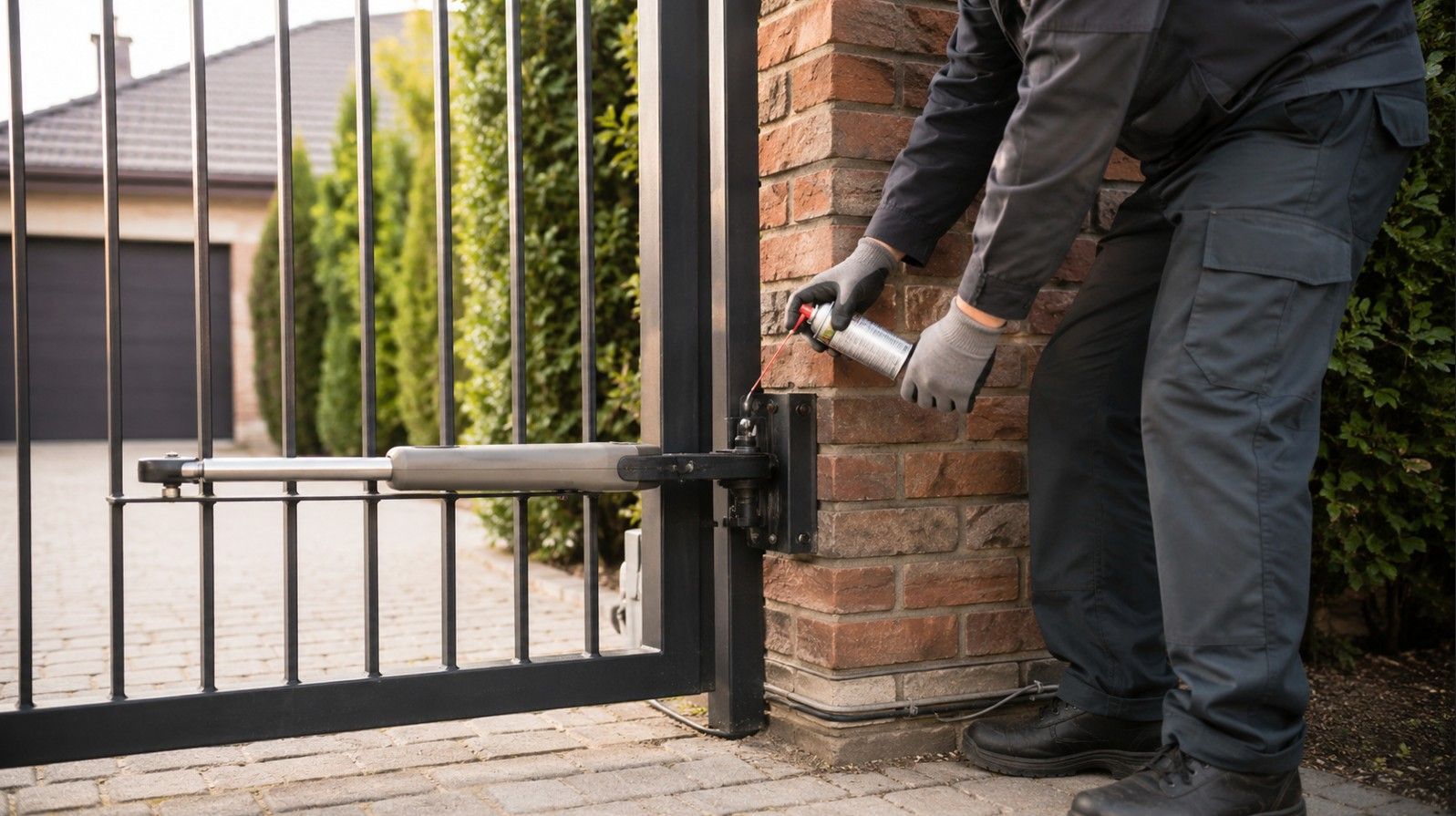
Electric gates require annual maintenance to remain safe, compliant and reliable. A properly maintained system lasts significantly longer, fails less often and continues to meet BS EN 12453 safety standards.
Why annual maintenance matters
Safety compliance
BS EN 12453 requires that powered gates are maintained to a safe standard. Safety devices degrade over time — a gate that passes its installation inspection can fail compliance within 12–18 months without servicing.
Preventing costly repairs
Small issues caught at a maintenance visit — a worn hinge, a degrading safety edge, motor force creeping out of limit — cost far less to address early than after a breakdown or a safety incident.
Extending system life
Lubrication, motor force calibration and mechanical adjustment all reduce wear significantly. A well-maintained system typically lasts years longer than one left to run until something fails.
Insurance and liability
If your gate causes an injury and it can be shown the system was not maintained, liability rests with the gate owner. Annual service records provide evidence of due diligence.
⚡ELECTRIC GATE MAINTENANCE
Safety edge close-up
Black rubber safety edge strip fitted to the leading edge of a metal gate
Photocell beam sensor
Photocell beam sensor unit mounted at the base of a gate pillar
Warning sign on gate
Automated gate warning sign affixed to a black metal gate
What an annual maintenance visit includes
A full maintenance visit covers every aspect of the system — mechanical, electrical, safety devices, access control and lubrication. A written maintenance report is issued at the end of every visit.
- · Gate alignment and travel
- · Hinge and bearing condition
- · Post stability
- · Track and roller condition (sliding gates)
- · Fasteners and fixings
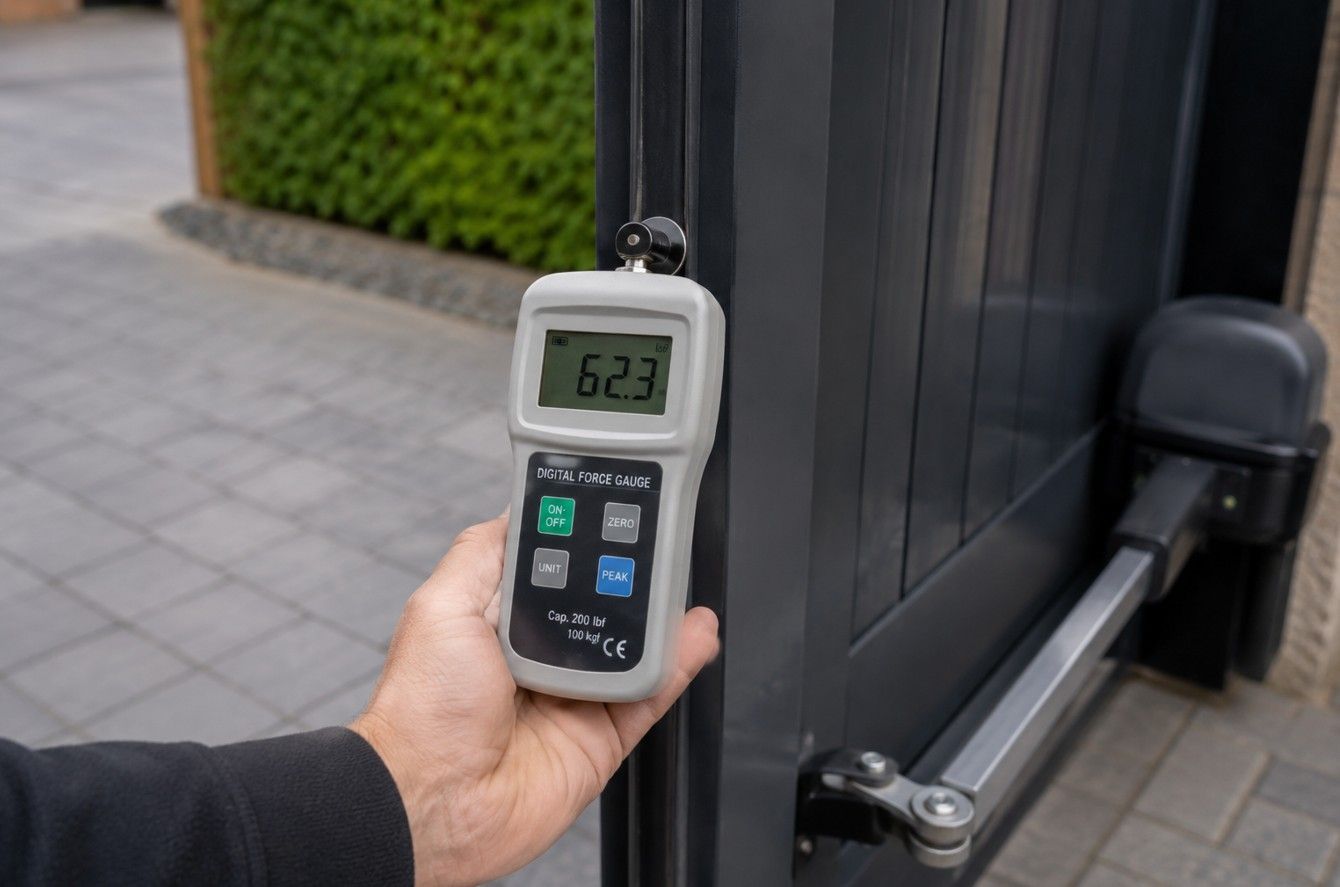
- · Motor force measurement (open and close)
- · Motor mounting and condition
- · Ram or in-ground unit inspection
- · Drive arm and bracket condition
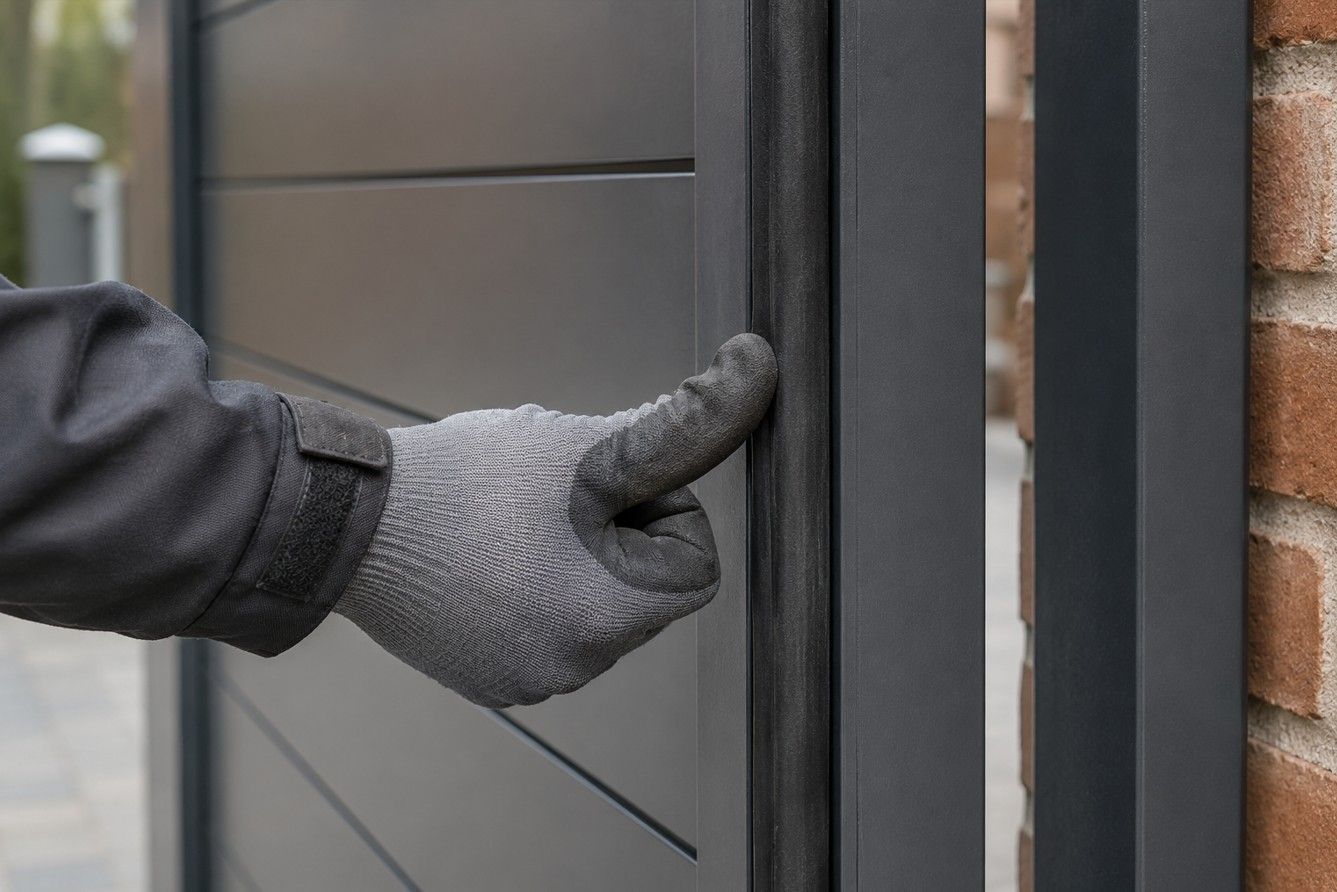
- · Safety edge resistance test
- · Photocell beam alignment and function
- · Auto-reverse test
- · Force limitation check to BS EN 12453
- · Control board inspection
- · Battery backup test
- · Cable condition check
- · Terminal and connection check
- · Remote fob function
- · Keypad test
- · Intercom test
- · GSM or app connectivity check
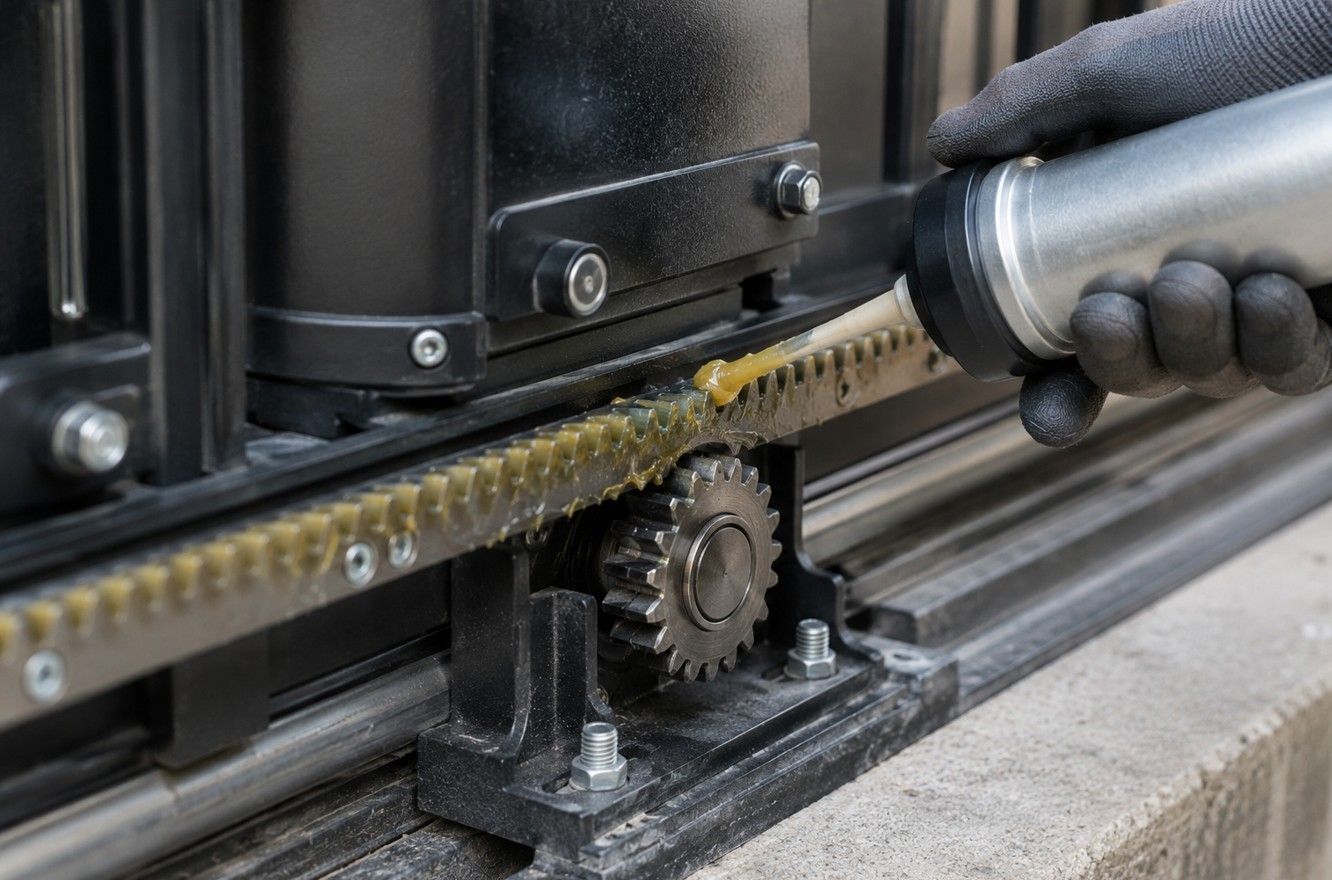
- · All moving parts lubricated
- · Drive mechanism greased
- · Hinges and pivot points treated
- · Written service report issued
- · Compliance status confirmed
How often should electric gates be maintained?
The frequency depends on how often the gate operates. The guide opposite gives a simple rule of thumb. When in doubt, annual maintenance is the minimum for any powered gate system.
Book a Maintenance Visit →BS EN 12453 recommends at least annual maintenance for all powered gate systems. This applies to residential and commercial installations alike.
Commercial properties, busy households and rental properties. High cycle rates accelerate wear on motors, hinges and safety edges.
Safety devices should be re-tested after any physical impact before resuming normal use. Do not assume the system is unaffected.
⚡ FREQUENTLY ASKED QUESTIONS ABOUT ELECTRIC GATE MAINTENANCE
Is annual servicing a legal requirement for electric gates?
There is no specific law that mandates annual electric gate servicing, but the Health and Safety at Work Act and the Supply of Machinery Safety Regulations place a duty of care on gate owners to ensure their gates are maintained safely. BS EN 12453 provides the recognised standard for compliance. For commercial properties, regular maintenance is essentially mandatory. For residential properties, it is strongly recommended and important for insurance purposes.
Do you maintain gates you didn't install?
Yes — some of our local installers service all makes and types of electric gate regardless of who installed them, but not all do. When enquiring, include the gate brand, motor brand and approximate age of the system so your installer can confirm.
How long does an annual maintenance visit take?
Most residential gate maintenance visits take between one and two hours. More complex installations with in-ground motors, video intercoms and multiple access control devices may take a little longer. Your installer will advise on timing when booking.
What documentation will I receive after a maintenance visit?
Your installer will provide a written maintenance report covering all items checked, any faults found, remedial actions taken and the compliance status of the safety devices. Keep this document safely — it is your evidence of due diligence.
My gate was recently installed — does it still need servicing?
New installations should be maintained at around 12 months after commissioning. This first maintenance visit catches any early wear issues and confirms the system remains within BS EN 12453 limits as components bed in during the first year of use.
Can I do any maintenance myself?
Basic visual checks are fine — keeping the gate path clear, ensuring the gate moves freely by hand and checking that fob batteries are fresh. However, safety device testing, motor force measurement and electrical checks must be carried out by a competent person with the right equipment. Do not attempt to adjust safety edge settings or motor force limits yourself.
Find your local fabricator
Choose your region to see every town we cover, or go straight to one of our busier locations below.
By region
Popular locations
Don’t see your town? Every location we cover is listed on our areas we cover page, or send us your postcode and we will confirm.