
Electric Gates
Lincolnshire
Electric gates supplied, fabricated and installed across Lincolnshire — from the Wolds and the coast through to the fens and the industrial north of the county. Swing gates, sliding gates, driveway automation and rising bollards, all made to measure.
A look at our work
Every gate we fit is made to measure for the property it goes on. Here is a small selection of recent installations — traditional and contemporary, swing and sliding.
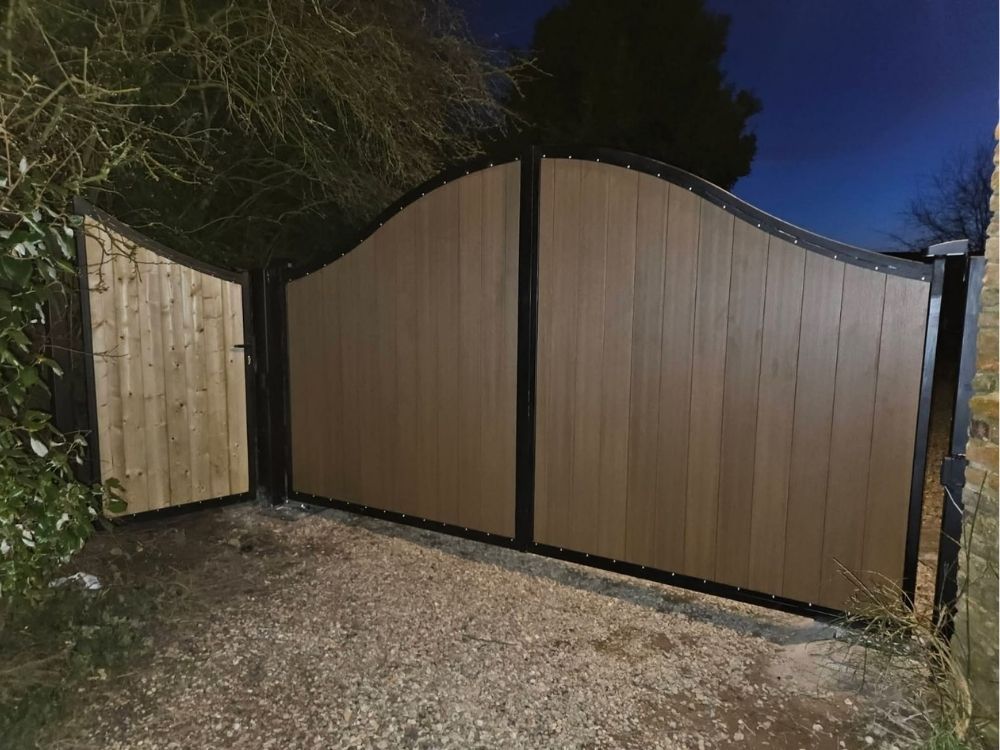
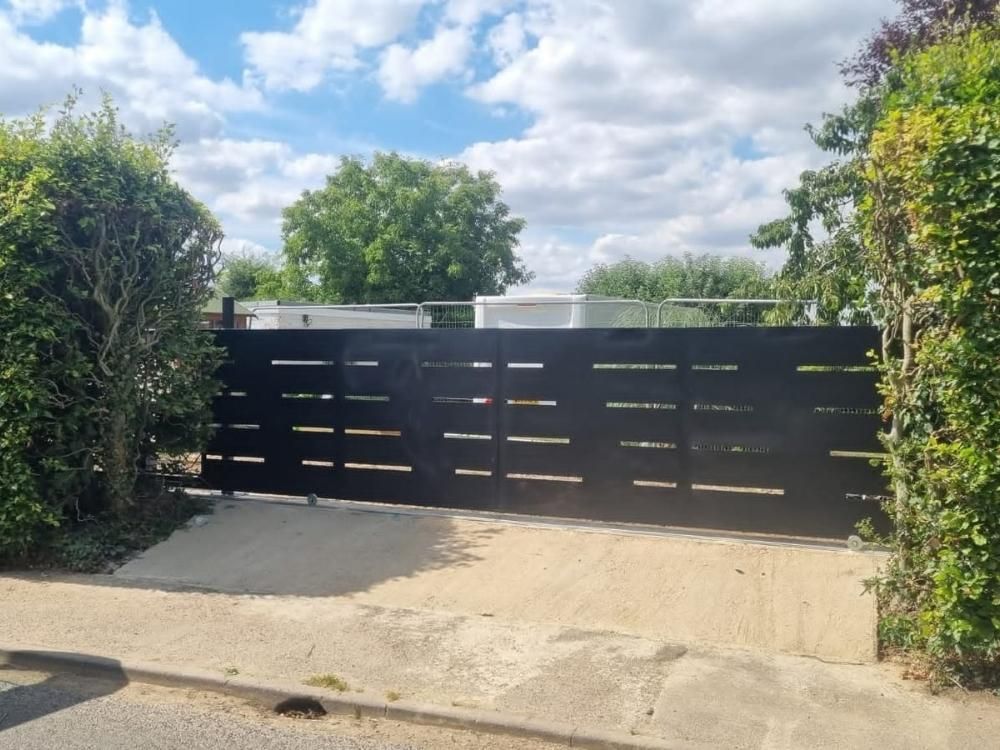
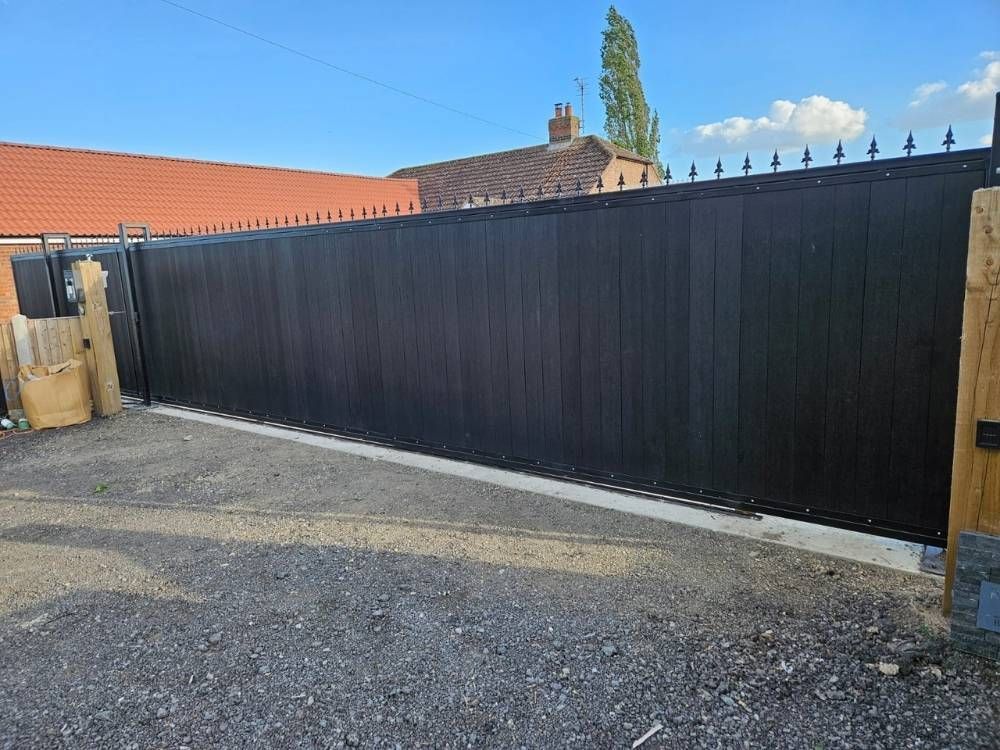
Andrew Wiles — fabricator and installer

Andrew has been fabricating and automating gates for thirteen years and has worked independently since 2020. He is based in Boston and covers the whole of Lincolnshire, along with Cambridgeshire and the north-western corner of Essex.
All the metalwork is made in his own workshop rather than bought in as stock sizes, which matters more than it sounds. It means a gate can be built to fit an opening that is out of square, on a slope, or wider at one side than the other — the kind of entrance you find on older and converted properties, where an off-the-shelf gate simply will not do.
Beyond gates he takes on structural steelwork, car ports and aluminium welding, and installs automated rising bollard systems built on the same underground motor technology he has worked with for years.
Lincolnshire is not one place
It is the second largest county in England, and what a gate needs to cope with changes considerably depending on where in it you live. These are the four factors that come up most often.
On the coast — salt air
From Skegness up through Mablethorpe to the Humber, salt-laden air corrodes untreated steel and works into hinge pins, bearings and control boxes. Hot-dip galvanising before powder coating, stainless fixings and sealed enclosures are worth specifying from the outset rather than treating as an upgrade.
Across the fens — wind
Flat, open country around Boston, Spalding and Holbeach means a gate takes far more wind load than the same gate on a sheltered street. A solid infill acts like a sail. The answer is deeper post foundations, heavier sections, or an infill that lets air through.
In the Wolds — gradient
Around Louth and Horncastle the ground genuinely rolls, and a swing gate opening into rising ground will catch as it travels. Options are to reverse the hang, re-level the approach, or fit a sliding gate, which gradient does not affect. Worth raising at enquiry rather than at survey.
In the north — duty cycle
Around Grimsby and Scunthorpe a good share of the work is industrial. A motor designed for a dozen operations a day will not survive an entrance doing two hundred. Specifying for realistic daily usage is the single biggest factor in whether a commercial installation lasts.
Electric gate types & services
Electric Swing Gates
The most popular residential choice. Two leaves hinged to pillars, opening inward or outward, in a wide range of materials and styles.
Learn more →Electric Sliding Gates
Slides parallel to your fence — no swing clearance needed. The usual answer on sloping ground, narrow plots or shallow driveways.
Learn more →Electric Bollards
Automatic rising bollards for driveways and commercial entrances. Raised for security, lowered flush for a completely clear opening.
Learn more →Driveway Automation
Full driveway systems including video intercom, keypads, remote fobs, vehicle detection loops and app control.
Learn more →Automate Existing Gates
Already have gates? In many cases motors can be added without replacing them — depending on condition, weight and structure.
Find out more →Gate Repairs
Motor faults, damaged panels, failed intercoms or misaligned tracks — repairs covered across the county.
Learn more →How much do electric gates cost in Lincolnshire?
Prices depend on gate size, material, type and automation spec. Ground conditions matter too — soft or waterlogged ground needs deeper post foundations than firm ground does, and that varies considerably across the county.
The figures below are typical ranges. A precise quote follows a site survey, which is free and carries no obligation.
Full cost guide →Frequently asked questions about electric gates in Lincolnshire
Which parts of Lincolnshire do you cover?
The whole county. Nineteen towns have their own page, listed below, and the surrounding villages of each are covered too. If your town is not shown, send us an enquiry with your postcode and we will confirm straight away — the list is the towns we have written about, not the limit of where we work.
Do you cover the whole county for servicing as well as installation?
Installation, yes, anywhere in Lincolnshire. For routine servicing, towns closer to Boston are naturally easier to schedule than those at the county edges. It is worth discussing when you book rather than assuming either way — we would rather be straight with you than promise a response time we cannot hold to.
Do I need planning permission for electric gates?
In most cases no — residential electric gates fall under permitted development rights in England. The main exceptions are gates over 1 metre adjacent to a highway, listed buildings, and properties in conservation areas. Lincolnshire has a good number of the latter two, particularly in Stamford, Louth and Barton-upon-Humber. Our planning permission guide covers the rules in full.
Can you make a gate to fit an unusual opening?
Yes. All metalwork is fabricated to measure rather than bought in as stock sizes, so an opening that is out of square, on a slope, or wider at one side than the other can be worked with rather than altered. Older properties, farm conversions and rural entrances frequently fall into this category.
How long does installation take?
Most residential installations are completed in one to two days. Projects involving new pillars, trenching for cable runs or full intercom systems can take two to three days. Bollard installations require excavation and typically take two days. Commercial work varies and is scoped at survey.
Electric gate installers across Lincolnshire
We cover the whole county, from the Wolds and the coast through to the fens and the industrial north. These towns each have their own page, and the surrounding villages of each are covered too.
Don’t see your town? Send us an enquiry — the surrounding villages of each are covered too, or see our Lincolnshire page for full coverage.